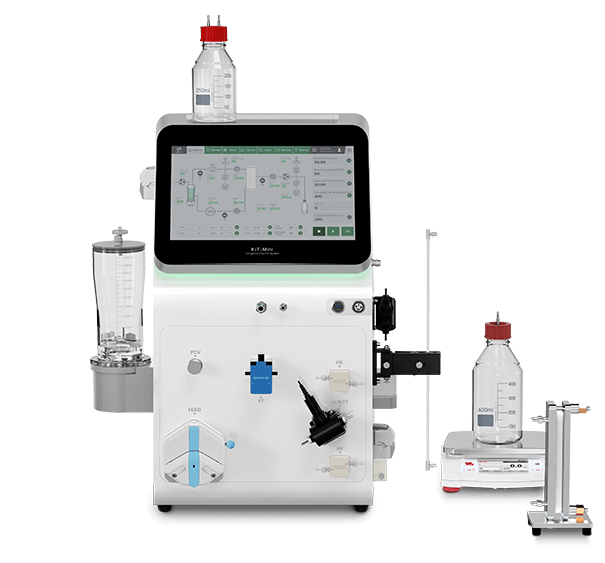
Opening
Wherein various expressions biological container also culture system frequently applied, there exist subtle differences between them. A fermenter generally points to a uncomplicated holding unit primarily focused on ensuring a proper surrounding for microorganism development. Bioprocess vessels, in contrast, are designed systems housing evolved supervision – for example acid-base modifying, temperature control modulation, and aeration supply. Effectively, a cell growth system is a improved elaborate version of microbial incubator designed for exact biological manufacturing tasks.
Concurrent Reactors: Growing Microbial Processing Effectiveness
Specific developing need touching on biological medications and eco-friendly fuels serves as triggering notable advances regarding biological production tool. Concurrent bioreactors introduce special persuasive remedy aimed at raise higher generation as well as continuing uniform excellence. By managing diverse replicated growth unit systems during coexisting, bioprocesses can gain higher output and upgraded production handling, ultimately decreasing charge and speeding up product availability.
Tangential Membrane Separation System Incorporation: Boosting Cell Culture System and Fermenter Effectiveness
Integrating Membrane-Based Filtration systems effectively with growth unit operations presents a paramount opportunity to strengthen overall process output. This approach facilitates for ongoing cell isolation, mitigating downtime and improving product quality. Elements include pairing appropriate straining materials, tailoring flow transfers, and implementing automated monitoring systems.
- Improved cell viability
- Decreased manufacturing outlays
- Steady product caliber
Cell Cultivation System Formulation Enhancements: Increase in Simultaneous Systems
Such mounting demand regarding biopharmaceuticals together with state-of-the-art biofuels requires prompted significant progress in bioreactor design. Formerly, bioreactor innovation aimed on lone processes, but currently parallel bioreactor series have grown into winning traction. These kind of systems enable professionals to run countless reaction experiments side by side, yielding to accelerated development turns together with better yields.
- Pros comprise increased throughput.
- These platforms aid reliable industrial enlargement.
- Multiple setups help with evaluating detailed biochemical characteristics.
Bioprocess Container Innovation: Particular Complete Instruction for Microbial Cultivation
Specific comprehensive reference to bioreactor innovation provides a important appreciation for biotechnological manufacturing practitioners. Vessels are core equipment in latest bioengineering, supporting the formulation of various biomolecules – encompassing therapeutics, consumable components, and industrial substances. Current review will examine central characteristics of fermenter operation, encompassing standards like acidity, climatic condition, diluted respiratory gas levels, and mixing.
- Growth Reactor Forms & Architectures
- Operation Handling Strategies
- Amplification Obstacles & Answers
- Cleaning Routines & Validation
Deciding on the Suitable Bio-Reactor: From Bioreactor Units to State-of-the-Art Technologies
Picking the suitable bioreactor is specific key decision concerning various bioprocess execution. Historically, fermenters served acting in the capacity of the central option, delivering an comparatively plain nevertheless inexpensive approach. However, since biotech manufacturing progresses, more specialized Ceramic Membrane Filtration System operations demand advanced solutions. Those kinds of contemporary bioreactors are capable of possess attributes covering exact heat oversight, mechanized pH regulation yet prompt tracking abilities.
- Consider dimension demands.
- Examine activity factors.
- Assess economic controls.
Synchronized Bioreactor Designs: Benefits and Functions
Parallel bioreactor structures offer significant positives compared to single bioprocess unit networks, particularly when boosting scale organic procedures. These groups allow for simultaneous development of many cultures, amplifying overall output and shortening production interval. Tasks are varied, stretching from just starting therapeutic research and boosting of culture elements, to huge production of bio-medications, eco-energy, and specific materials.
- Multiple designs upgrade efficiency.
- Facilitates parallel group execution.
- Shrinks overall production period.
Crossflow Filtration Method: Accelerating Bioreactor Production Cleansing
The flow filtration method grants a significant benefit in optimizing the refinement of growth unit performance. Typically, the operation comprises first densification steps, next fluid trade to secure the goal-specific output trait. This mechanized operation cuts down on hands-on time and enhances total procedure efficiency while guarding component purity and capacity. Finally, the generated liquid extract is prepared for further processing.